




Mining cryptocurrencies can provide a decent profit. Today, mining the most well-known digital coins can be considered a lucrative activity. Ethereum has always been regarded as one of these profitable coins.
Ethereum mining used to offer users up to 200% annual profit, although this figure largely depended on market conditions and the equipment in use.
It is worth recalling that Ethereum is a digital platform launched in 2015, initially conceived as a space for creating decentralized applications.
The native cryptocurrency of the Ethereum network, known as Ether, gained huge popularity almost immediately after its launch and quickly became the second-most popular cryptocurrency in the world, surpassed only by Bitcoin.
Ether was considered one of the most profitable cryptocurrencies to mine with GPUs. From the very beginning, the Ethereum network’s coin used the Proof-of-Work (PoW) algorithm, meaning it could be easily mined with graphics cards.
However, in September 2022, a major event took place for crypto enthusiasts: the Ethereum network transitioned to a new Proof-of-Stake (PoS) algorithm. This new approach is no longer as simple, as it does not support the usual mining with graphics cards.
Since autumn 2022, validation on the Ethereum network has been performed exclusively by validators. They now confirm new transactions through staking and, in turn, receive rewards for their work.
In this article, we will look more closely at how Ethereum can be earned following the transition to PoS, how PoS differs from PoW, the Ethereum forks that serve as alternatives for miners, and the opportunities for mining these coins.
Ethereum can no longer be mined

Mining cryptocurrency is the process by which transactions are validated within a blockchain network. Miners use powerful computers for this task, as solving complex mathematical problems requires high-performance hardware. In exchange, miners receive cryptocurrency as a reward.
There are two main consensus mechanisms used in cryptocurrency mining: Proof of Work (PoW) and Proof of Stake (PoS).
Ethereum, one of the most popular cryptocurrencies among users, transitioned from PoW to PoS in September 2022. This transition, known as Ethereum 2.0, aimed primarily to significantly improve the scalability and security of the Ethereum network.
The Proof-of-Stake (PoS) algorithm offers not only greater energy efficiency and scalability, but also the potential to launch more nodes, which can contribute to increased decentralization.
With Ethereum’s move to the PoS algorithm, the mining landscape changed dramatically. Following the transition, mining Ether became impossible. Now, only the number of tokens held by a cryptocurrency user is of key importance.
However, there are attractive alternatives for those who still want to engage in mining according to the old model. For example, Ethereum forks such as Ethereum Proof of Work (ETHW) and Ethereum Classic (ETC) offer a viable and potentially profitable alternative.
Before discussing the Ethereum forks and ways to mine, sell, and profit from them, let us first clarify the concepts of Proof of Stake and Proof of Work.
Difference between PoS and PoW
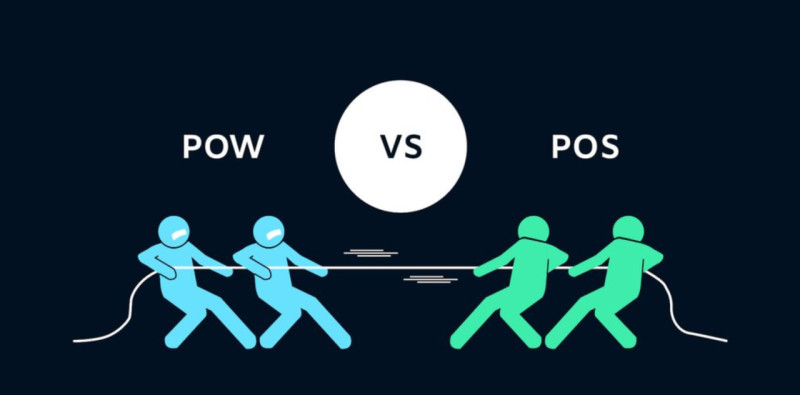
The Proof of Stake (PoS) consensus algorithm is based on demonstrating ownership of a stake. Under the Proof of Work (PoW) system, the next block is most likely to be produced (and the reward earned) by the miner with the most powerful computer or mining hardware.
In contrast, with PoS, the user who has staked the largest number of coins is most likely to receive the reward.
Previously, mining Ether was accessible even to users who simply held the coin in their crypto wallet on a smartphone or stored it on a modestly powered personal computer.
Advantages and disadvantages of the PoS algorithm for ETH
The PoS algorithm brought the following advantages to ETH:
- There is no longer any need for expensive, high-performance mining equipment;
- Network security has increased, thanks to the greater responsibility of validators;
- Validators now have the opportunity to earn a profit;
- Decentralization has been further improved;
- The network now operates faster;
- Network fees have decreased;
- Electricity consumption has dropped significantly.
However, not everything is as rosy as it might seem. After the transition to PoS, Ethereum faced some drawbacks:
- A substantial amount of coins must now be staked;
- The annual yield is relatively low, not higher than 5%.
Let us take a closer look at the advantages. For example, the reduction in electricity consumption for the Ethereum network is a clear benefit and hard to dispute.
On the other hand, lower profitability is not necessarily a reason to be discouraged. For instance, if the price of ETH rises significantly, a yield of up to 5% can offer network users very attractive returns.
There was once a belief that, due to the PoS algorithm, validators with large stakes would simply take over the rewards that previously went to GPU miners. In practice, however, this assumption turned out to be completely unfounded.
After the Ethereum network’s transition, the issuance of its coin decreased significantly, by approximately 90%. However, the possibility of earning profits still remains.
As of June 2022, around 10% of all network fees that were initially intended for users were redirected directly to miners. All coins that remained were simply burned.
Under the PoS algorithm, validators gained the opportunity to earn up to 7% annual returns—still funded by those same fees. With commission volumes at 4.2%, the yield can reach about 66%.
When it comes to the advantage of faster network operation, the reality is somewhat mixed. With PoS, a block is created every 12 seconds, compared to 13.3 seconds under PoW.
In terms of the overall architecture of the Ethereum network, this can certainly be seen as progress. However, in practice, an acceleration of around 10% generally does not have a significant impact on transaction speed.
The number of coins that must be staked under the PoS algorithm depends entirely on the type of node.
There are only two types of nodes operating in the Ethereum network:
- Those that propose blocks for creation (a minority; must have at least 32 ETH staked)
- Those that do not propose blocks
Users who meet all these requirements can create new blocks and receive rewards for doing so. All other network participants will also receive their staking rewards, regardless of how many coins are held in their wallet or on their computer. The only difference is that those staking less than 32 ETH will need to pay a commission to the network.
What should you do if you used to mine Ether under PoW?
If you still have functioning equipment that you used for mining Ether with PoW, you now have the following options:
- Continue mining;
- Switch to Ethereum Proof of Work or Ethereum Classic (both still using PoW);
- Switch to another PoW network;
- Sell your equipment.
Let us take a closer look at the first option. Theoretically, after the switch to PoS, miners could attempt to continue working as before. In this case, they would end up creating dead-end chains that result in the mining of “ghost” coins, which cannot be accessed.
Ethereum Proof of Work (ETHW)
With Ethereum’s transition to Proof of Stake (PoS), the mining landscape changed drastically. However, this does not mean the end of the road for miners. Today, there are two Ethereum forks:
| Ethereum Proof of Work (ETHW) | Ethereum Classic (ETC) |
First, let us clarify what a fork is. The term “fork” literally means “split” or “branch.” In the realm of cryptocurrency, a fork is the splitting of a blockchain into two separate branches.
These new chains then function as two independent cryptocurrencies, and they offer users a viable and potentially profitable alternative. Let us take a closer look at each.
Ethereum Proof of Work (ETHW) emerged as a separate branch after Ethereum moved to PoS. ETHW retained the Ethash algorithm, maintaining the same mining approach formerly used by Ethereum. So, if you previously mined Ethereum, you can now transition to mining ETHW with only minor adjustments needed in your setup.
Mining ETHW has its advantages:
1. The WoolyPooly mining pool offers rewards via Pay Per Last N Shares (PPLNS) and SOLO methods.
2. The mining fee is low—only 0.9%, deducted from block rewards.
3. No transaction fees are charged.
4. WoolyPooly operates dedicated servers worldwide, ensuring uninterrupted mining regardless of your location.
5. WoolyPooly features adaptive share difficulty (Vardiff), meaning the difficulty level adjusts automatically based on your equipment’s power.
6. The payout process is straightforward.
Ethereum Classic (ETC)
Another fork of Ethereum is Ethereum Classic (ETC), which is also a suitable option for former Ethereum miners.
ETC operates on the original Ethereum blockchain and continues to use the Proof of Work (PoW) consensus mechanism. This means that ETC can be mined in the same way as Ethereum was prior to its transition to PoS.
ETC has an active and engaged community of supporters and developers, and this fork is listed on a wide range of cryptocurrency exchanges.
ETC is an excellent choice for miners who are looking for a stable and highly accessible mining option.
How to mine Ethereum forks

Mining Ethereum forks includes the following steps:
1. Choose a mining method.
You can mine solo, join a mining pool, or use cloud mining services.
2. Purchase the necessary equipment and install software.
The hardware and software required will depend on which Ethereum fork you intend to mine. It is best to make sure you have all the components you need in advance.
Choosing an Ethereum fork to mine
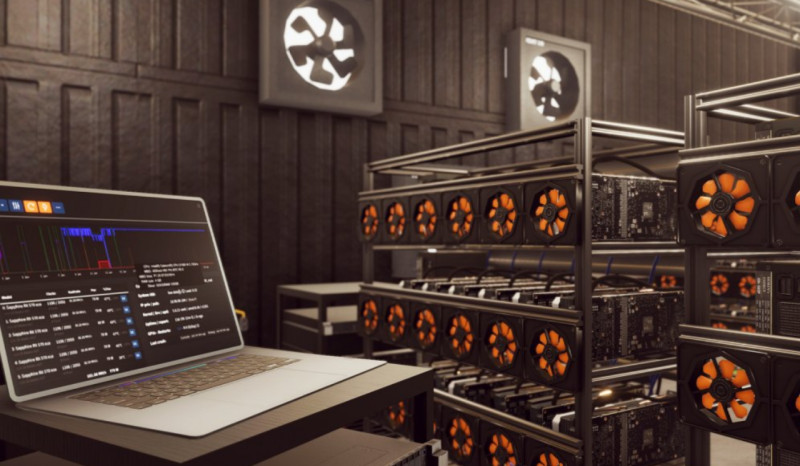
When selecting an Ethereum fork to mine, it is important to consider a few key factors: expected profitability, mining difficulty, and the community’s activity level. As already mentioned, ETHW and ETC both offer attractive profit opportunities.
To start mining ETHW, follow these steps:
1. Select a mining pool. Join a pool such as WoolyPooly to increase your chances of receiving rewards.
2. Set up your hardware. Follow the instructions provided by your chosen mining pool to configure your system correctly.
3. Begin mining. Once everything is set up, you can start mining and earning ETHW.
The process for mining the ETC fork is virtually the same. You need to choose a mining pool, configure your hardware, and start mining. WoolyPooly is also an excellent option for mining ETC.
After successfully mining Ethereum forks, you can sell them on any cryptocurrency exchange and use the proceeds to purchase ETH.
Mining via Windows

To successfully mine Ether forks, you will need a Windows 7 64-bit operating system or a newer version. Here are the steps required to get started:
1. Check your hardware.
Ensure that your graphics card has at least 4 GB of memory, and your PC’s RAM is also at least 4 GB. It is essential to have a stable and continuous internet connection.
2. Install graphics card drivers.
If you are using an AMD graphics card, visit the manufacturer’s official website to download and install the latest driver version. For mining, you may also install specialized drivers. If you have an Nvidia GeForce card, download the driver from the Nvidia website. Be sure to restart your computer after installation.
3. Create an Ethereum wallet.
You can use services such as MyEtherWallet.com or register a wallet on a cryptocurrency exchange like Binance or StormGain. Keep in mind that some exchanges may not support very small deposits or transfers from mining pools. Make sure to keep your private key stored in a safe place.
4. Download mining software.
There are various mining programs for Ether forks. Choose the one that suits you and download it.
5. Configure Windows for mining.
Increase your virtual memory to at least 16,384 MB, then disable sleep mode in the Windows power settings. In the updates section, turn off automatic updates. If you use antivirus software or Windows Defender, add the mining program to the list of allowed applications.
6. Choose a mining pool.
Pay attention to the pool’s reputation and terms when selecting the best option.
7. Configure the program’s .bat file.
Edit the .bat file according to the pool’s instructions so the software connects to the network correctly.
8. Launch and edit the .bat file.
Once the mining program is running, check the settings and edit the .bat file as needed to start the mining process.
Mining via Mac OS
Mining Ethereum forks on Mac OS is considered inefficient and, in most cases, impractical.
This is mainly due to the fact that the most popular Ethereum mining programs are not supported on this operating system.
However, there are exceptions, such as Minergate, which can be used for mining. To get started with Minergate, follow these steps:
1. Download the program from the official Minergate website.
2. Register by providing your email address.
3. Log in to your account through the installed application.
4. Start the mining process.
It is important to note that even when using Minergate on Mac OS, mining with a graphics card is not possible, which greatly limits the efficiency of this method.
How to choose hardware for mining
Before you start mining Ether (forks), you must purchase the appropriate computer hardware. To mine with a graphics card, you will need the following components:
- Motherboard
- Graphics card
- Power supply
- Processor
- RAM
- Hard drive (HDD)
It is crucial that all these components are compatible with each other in terms of their technical specifications. The only exception is when you plan to purchase more powerful hardware in anticipation of future upgrades and the expansion of your mining rig.
Motherboard
When choosing a motherboard for mining, you should consider several key features:
| Form Factor | This parameter determines the size of the board. It is best to opt for a full-sized ATX form factor, as this allows you to install more graphics cards. |
| Number of PCI-E Slots | The more PCI-E slots, the more graphics cards you can connect. This is important for increasing your mining rig’s capacity in the future. |
| Number of Fan Connectors | Graphics cards operate under heavy load during mining, which causes them to heat up. Extra fans help prevent overheating, so it is important to have more connectors for them. |
We recommend selecting motherboards specifically designed for mining. Such boards are usually equipped with a large number of PCI-E slots and have an ATX form factor. They provide stable power for connected graphics cards, making them ideal for mining rigs.
Graphics card
Choosing the right graphics card for cryptocurrency mining is one of the most important steps in building an efficient and profitable mining operation. But how do you select the best graphics card?
Let us outline the main criteria to consider when purchasing a mining GPU:
1. Hashrate
Hashrate refers to the number of operations a graphics card can perform in a set period of time. The higher the hashrate, the more cryptocurrency you can mine.
Keep in mind that different cryptocurrencies may require different algorithms, so choose your graphics card according to your goals and planned mining projects.
2. Power consumption
Power consumption (TDP) is a crucial parameter that indicates how much energy the graphics card uses. This is especially important since electricity costs make up a significant share of mining expenses.
It is recommended to select graphics cards with low power consumption that still deliver high hashrate.
3. Video memory capacity
The amount of video memory also significantly impacts mining efficiency. For example, Ethereum has always required a considerable amount of video memory to run effectively. Therefore, choose models with higher memory capacity to improve your mining performance.
4. Graphics card price
The price of the graphics card is another important factor to consider. Look for options that offer the optimal balance between cost and hashrate.
Remember, more expensive models may have a high hashrate, but they are not always the most cost-effective choice in the long run.
5. Cooling/ventilation
The cooling system of the graphics card is crucial for efficient mining. Fans help prevent overheating, which can lower performance and shorten the device’s lifespan.
Pay attention to models with reliable cooling systems to ensure stable operation even under heavy loads.
6. Connectors
Do not forget to take the available connectors into account. For instance, Ethereum previously required specific connectors like DisplayPort or HDMI.
7. Practical performance
It is extremely important to consider the real-world performance of a graphics card. Sometimes the official specs can be misleading, and a card that looks good on paper may prove less effective in practice.
Check test results, read and watch reviews, and talk to other miners to get objective information on this crucial parameter.
In summary, choosing a graphics card for mining Ethereum forks is a vital step to success in this field. Pay attention to hashrate, power consumption, memory size, price, cooling, connectors, and actual performance. Make your decision based on your specific needs and goals.
Power supply unit (PSU)
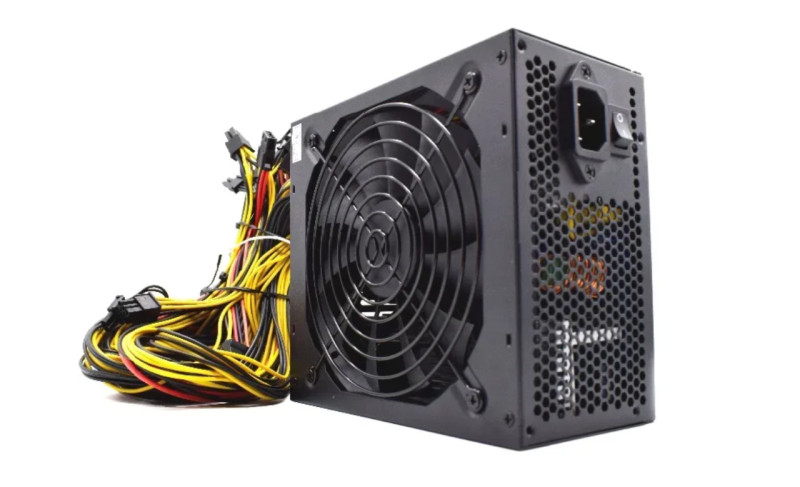
The power supply unit serves two main functions:
1. It provides electricity to all connected components.
2. It protects system components from power surges and fluctuations.
It is clear that choosing the right power supply is just as important as selecting other hardware. The key parameter here is its wattage, which is measured in watts.
The wattage determines how many graphics cards you will be able to connect to your mining rig. For safe operation, it is recommended to have about a 10% power reserve above the total estimated consumption. For example, a rig with three standard graphics cards requires a power supply of approximately 1,400–1,500 W.
Another important aspect is the number of PCI-E cables available, as these allow you to connect graphics cards to the PSU. As previously mentioned, the more PCI-E connectors, the more graphics cards you can integrate into your system.
Processor (CPU)

Even when using powerful graphics cards (GPUs) for mining, you do not need to choose a top-tier processor (CPU). However, a very weak processor will also not be sufficient for a medium-sized mining rig.
When choosing a CPU, pay attention to the following parameters:
1. Socket.
This is the slot that connects the processor to the motherboard. The CPU socket and motherboard socket must match. For example, the ASRock H110 Pro BTC+ motherboard has an LGA1151 socket, which is compatible with processors such as the Intel Core i3-6100.
2. Number of cores.
The processor consists of cores, each capable of handling tasks simultaneously. For a rig with 2–3 graphics cards, a dual-core processor with 4 threads will be sufficient.
3. Clock speed.
This parameter determines how many operations the processor can perform each second. The higher the clock speed, the more efficient the CPU will be.
It is important to ensure the processor is compatible with your motherboard, as their sockets must match.
Additionally, the power of the processor should correspond to the expected workload of your mining rig. For example, if you plan to use 4–6 powerful graphics cards, it is better to choose a quad-core processor with 8 threads.
Hard drive
The primary function of an HDD is to install the operating system and mining software. For most miners, a capacity of 500 GB is sufficient. However, traditional hard drives (HDDs) are considered slow devices.
That is why, in 2024, many crypto enthusiasts prefer to use solid-state drives (SSDs), which significantly outperform HDDs in terms of read and write speeds.
As of April 8, 2022, the cost of a 500 GB SSD was twice as high as that of a comparable HDD. However, to be fair, their exceptional performance fully justifies the price difference.
Conclusion
On September 15, 2022, the Ethereum network underwent a major update that transitioned the blockchain from the Proof-of-Work (PoW) consensus algorithm to Proof-of-Stake (PoS).
This event marked the end of the era of mining ETH using PoW. Today, the main criterion in the network is the number of tokens held by the user.
Since its launch in 2015, Ethereum has relied on mining to keep the network secure and to generate coins. However, the project’s creators always aimed to switch to a more secure protocol that would allow for the integration of new technologies and help reduce energy consumption.
The most significant change resulting from the update, once again, is that mining ETH is now impossible. Nevertheless, this new reality does not leave GPU owners without earning opportunities.
Mining Ethereum in the traditional way is no longer possible, but you can choose to mine any other cryptocurrency (there are plenty on the market) or continue mining on Ethereum forks such as Ethereum Proof of Work or Ethereum Classic.
For example, Ethereum Proof of Work emerged as a separate branch after Ethereum’s transition to PoS. It is attractive because it retains the Ethash algorithm and offers the same mining approach as the original Ethereum. Ethereum Classic is also a good option for those who previously mined Ether.


 Back to articles